Everything you need to know about living in Provincetown MA, from year-round lifestyle and LGBTQ+ community to housing costs, dining, and seasonal rhythms.
Living in Provincetown MA means choosing a life shaped by art, ocean, and a community unlike any other in America. At the very tip of Cape Cod, this town of roughly 3,600 year-round residents offers a walkable downtown, world-class dining, a thriving LGBTQ+ community, and a creative energy that has drawn artists and writers for over a century. Whether you are considering a permanent move or a second home, understanding what daily life here actually looks like will help you decide if Provincetown is your place.
This guide covers the neighborhoods, housing market, seasonal rhythms, dining scene, and practical realities of living on the Outer Cape with a focus squarely on Provincetown.
Why People Choose Provincetown
Provincetown attracts residents who value authenticity over convenience. Nearly everything you need sits within a mile of Commercial Street: grocery stores, restaurants, galleries, a post office, a library, and the harbor, all accessible on foot or by bicycle.
The 2020 census confirmed that Provincetown has the highest rate of same-sex couples of any community in the United States, but that statistic only hints at the deeper culture. Families, artists, retirees, and remote workers are drawn here because being different is celebrated rather than merely tolerated.
The Cape Cod National Seashore wraps around three sides of town, giving residents protected beaches, dune trails, and whale watching from Race Point without leaving town limits.
The LGBTQ+ Community and Culture
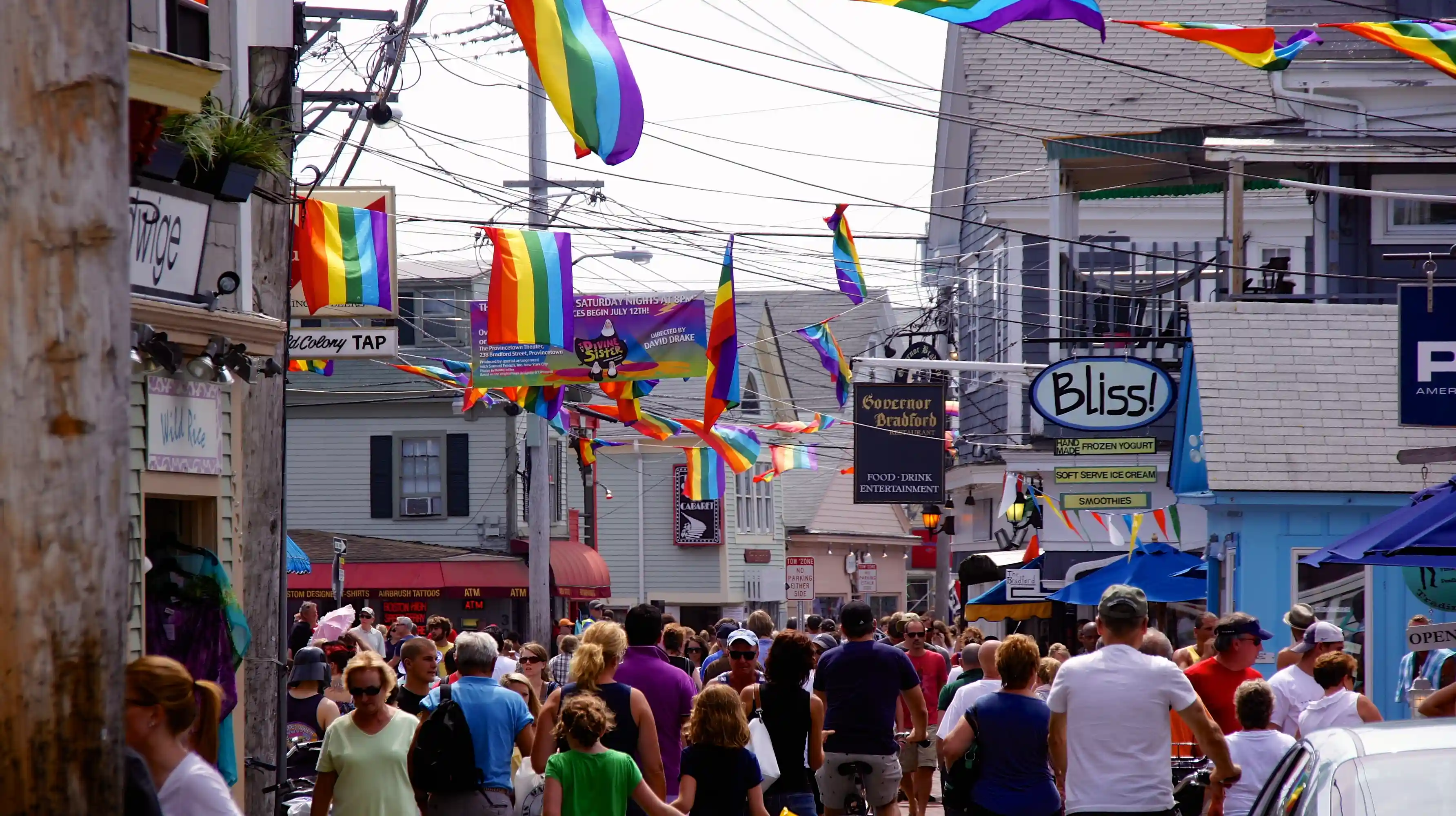
Provincetown has served as an LGBTQ+ haven for nearly a century. After the Stonewall uprising in 1969, the town actively welcomed the queer community, fundamentally shaping its identity. Rainbow flags line Commercial Street year-round, not just during Pride.
The Provincetown Business Guild, one of the oldest LGBTQ+ chambers of commerce in the country, supports local businesses and events. Carnival Week in August draws nearly 90,000 visitors. Bear Week, Women's Week, Family Week, and themed weekends fill the calendar from May through October.
For LGBTQ+ families considering moving to Cape Cod, Provincetown offers a school system where children grow up seeing their families reflected in the broader community. That normalized visibility is a primary reason families relocate here.
Provincetown's Arts Scene
The arts colony began in 1899 when painter Charles Webster Hawthorne opened the Cape Cod School of Art, drawn by the exceptional coastal light. That legacy now spans more than 125 years.
The Provincetown Art Association and Museum (PAAM) has operated for over a century. The Fine Arts Work Center offers 20 seven-month residencies annually, and its alumni include Pulitzer Prize winners, Guggenheim Fellows, and a Nobel laureate. Dozens of galleries cluster along Commercial Street in the East End Gallery District, representing serious working artists with regular openings and talks year-round.
For performers and audiences, Provincetown hosts the Tennessee Williams Theater Festival and a lively cabaret scene at the Crown and Anchor and Art House. The creative community is not layered on top of the town. It is the town.
Neighborhoods and Where to Live
Understanding Provincetown's distinct neighborhoods helps buyers match their lifestyle to the right location.
West End sits closest to the National Seashore and Herring Cove Beach. Properties here tend to offer more space, privacy, and a quieter residential feel. Many residents bike to the beach daily from the West End.
East End is home to the Gallery District and the East End Market. Harborfront properties on the south side of Commercial Street are among the most coveted on the entire Outer Cape, with direct water views and private beach access.
Commercial Street (Downtown) features mixed-use properties with ground-floor retail and upper-floor residences or condominiums. Living here means stepping out your door into the pulse of town, though summer foot traffic requires a tolerance for crowds.
Hilltop and Bradford Street properties provide panoramic views of the harbor and bay while remaining within walking distance of everything. These homes often offer more parking and yard space than downtown locations.
Housing Market and Cost of Living
The median home sale price hovers between $1.15 million and $1.25 million, though condominiums provide entry points in the $400,000 to $600,000 range. Over half of all housing units are classified as seasonal or occasional use, constraining year-round inventory.
Cost of living runs approximately 36 percent above the national average, driven primarily by housing. Monthly expenses average $3,350 for a single person and $7,400 for a family of four according to 2025 Salary.com data.
The town actively supports year-round residents through its Lease to Locals program, which offers landlords $6,000 to $20,000 for converting seasonal properties to year-round rentals. For buyers evaluating Provincetown listings or investment properties, understanding seasonal rental income potential is essential for offsetting carrying costs.
Dining and Food Scene
Provincetown's restaurant scene punches far above its weight for a town of 3,600. Fresh seafood arrives directly from Portuguese fishing boats at MacMillan Wharf, and chefs here know how to honor those ingredients.
Year-round staples include The Lobster Pot for traditional New England seafood with harbor views, The Canteen for elevated casual fare, and Liz's Cafe for French-inspired breakfasts that draw lines even off-season.
Summer dining expands dramatically with dozens of restaurants opening between May and October, from raw bars and wood-fired pizza to fine dining tasting menus. The Portuguese Bakery remains a beloved stop for malasadas that connect to the town's fishing heritage. A weekly farmers market and growing craft cocktail scene round out a food culture residents consider a genuine quality-of-life asset.
Seasonal Rhythms of Provincetown Life
Living in Provincetown means embracing distinct seasonal chapters.
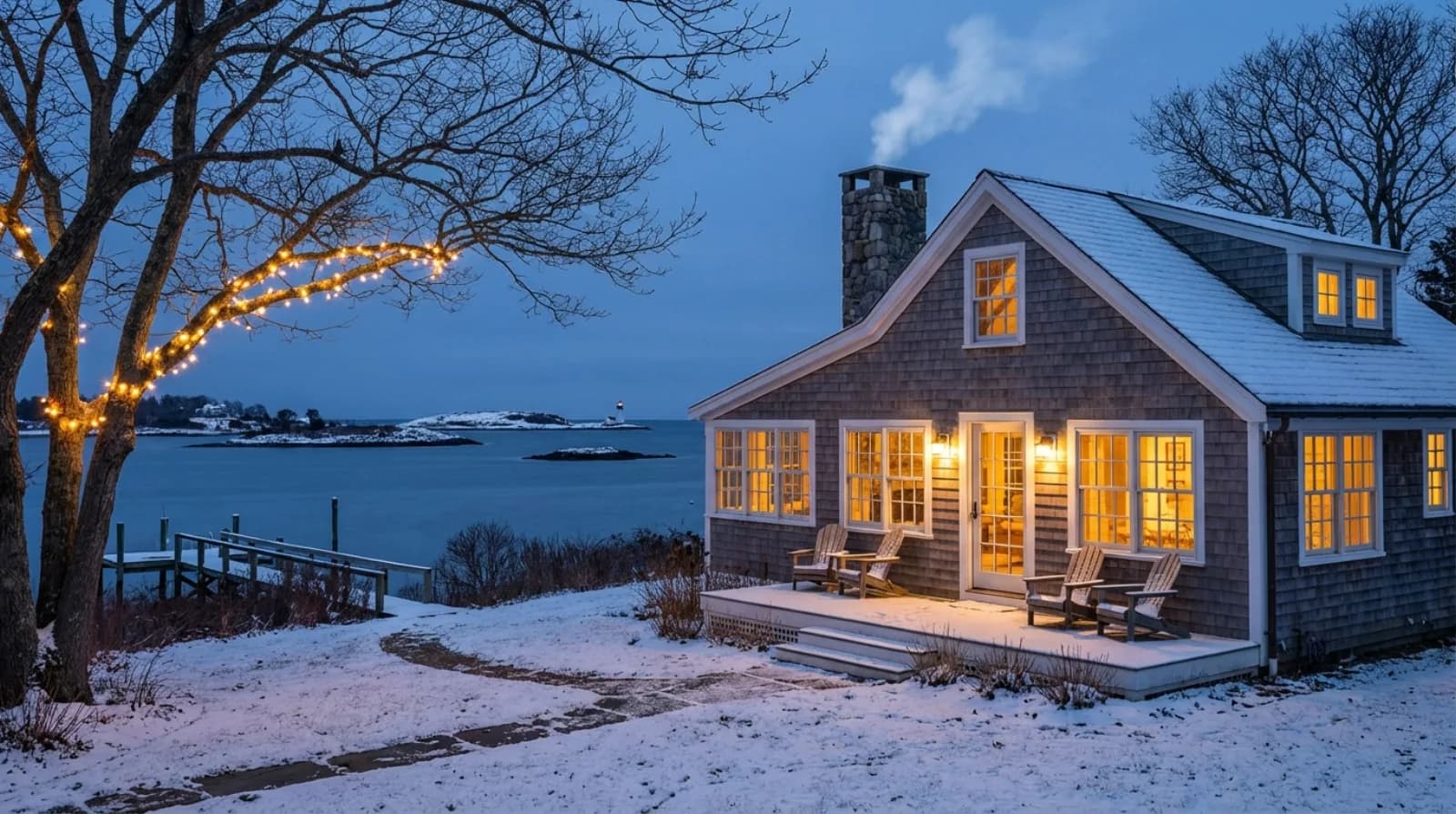
Winter (December through March) is the quietest period. Many businesses close and the town belongs to residents. Writers, artists, and remote workers treasure winter for uninterrupted focus. Community suppers, film screenings, and walks on empty beaches define the months. Temperatures stay milder than inland New England, though nor'easters bring wind and occasional power outages.
Spring (April and May) signals the slow return. Restaurants reopen, gardens bloom, and whale watching season begins as humpbacks return to Stellwagen Bank.
Summer (June through September) transforms the town. The population swells to 60,000 on peak weekends. Year-round residents develop strategies: early beach trips, off-peak grocery runs, and a willingness to share their town.
Fall (October and November) is the season many residents love most. Warm ocean water, thinning crowds, and golden light make this the best time to experience Cape Cod.
Practical Considerations for Year-Round Living
Healthcare
Outer Cape Health Services operates a facility in Provincetown offering primary care, dental, behavioral health, and pharmacy services. For specialists and emergency care, Cape Cod Hospital in Hyannis is about an hour's drive. This distance matters and is one of the trade-offs of year-round Cape Cod living.
Schools
Provincetown has a small public school system. The Veterans Memorial Elementary School serves younger students, while older students attend the Nauset Regional school system. Class sizes are small, and the community is deeply involved in education.
Transportation and Remote Work
Daily life is walkable and bikeable. For trips beyond town, most residents own a car. The Boston ferry offers a 90-minute high-speed ride from May through October, and the Provincetown Municipal Airport has seasonal connections. The 2020 census growth of 24.5 percent reflects the remote-work migration, and improved broadband infrastructure now supports a growing remote workforce.
Frequently Asked Questions
Is Provincetown a good place to live year-round?
Provincetown is excellent for those who value community, walkability, arts, and nature. Trade-offs include limited specialist healthcare, higher housing costs, and winter business closures. Most year-round residents consider these worthwhile.
How much does it cost to live in Provincetown?
Monthly expenses average $3,350 for a single person and $7,400 for a family of four, roughly 36 percent above the national average. The median home price sits between $1.15 million and $1.25 million, with condos starting around $400,000 to $600,000.
What is the year-round population?
Approximately 3,600 residents year-round per the 2020 census, a 24.5 percent increase from the previous decade. Summer weekends swell to 60,000 visitors and seasonal residents.
Is Provincetown walkable?
Provincetown is one of the most walkable towns in Massachusetts. Grocery stores, restaurants, the post office, library, healthcare, and the harbor are all accessible on foot or by bike along Commercial Street.
What makes Provincetown different from other Cape Cod towns?
Its internationally recognized LGBTQ+ community, century-old arts colony, Portuguese fishing heritage, and year-round cultural programming set it apart. Unlike other Cape towns, Provincetown maintains active restaurants, galleries, and events throughout the off-season.
Start Your Provincetown Journey
Living in Provincetown is not for everyone, and that is precisely what makes it special. If choosing community over convenience, creativity over conformity, and ocean air over urban amenity sounds right, the next step is exploring what is available.
Browse current Provincetown listings, explore the Provincetown neighborhood guide, or review the latest Outer Cape market data. When you are ready to talk, reach out directly for a conversation about finding your place at the tip of Cape Cod.