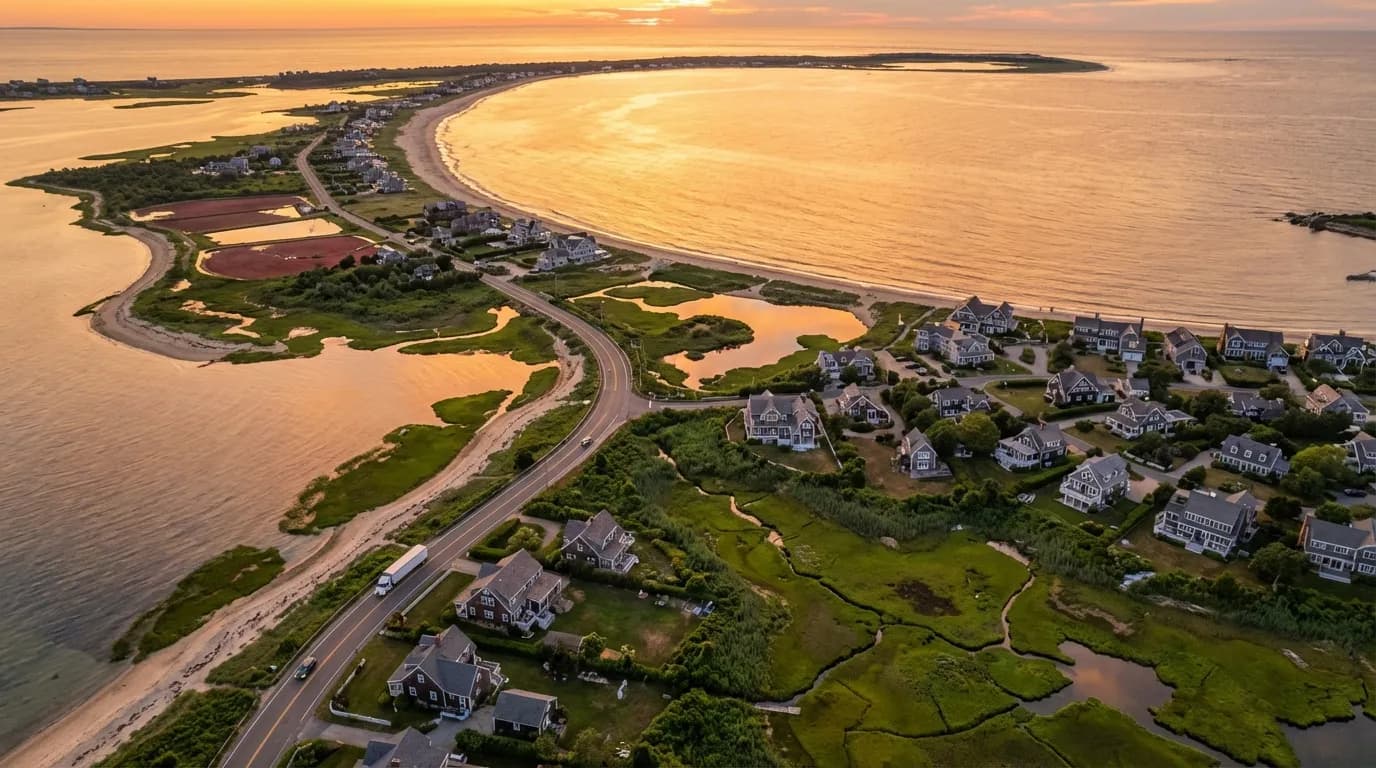
Everything you need to know about relocating to Cape Cod, from cost of living and best towns for your lifestyle to schools, healthcare, and a step-by-step moving checklist.
Cape Cod has long captured the imagination of those dreaming of coastal living. The hook-shaped peninsula extending into the Atlantic Ocean offers more than just summer vacations and postcard-perfect beaches. For an increasing number of families, professionals, and retirees, Cape Cod represents a permanent home where the rhythms of the sea set the pace for daily life.
Whether you're drawn by the prospect of waking up to ocean views, raising your family in tight-knit communities, or seeking a peaceful retirement surrounded by natural beauty, moving to Cape Cod requires thoughtful planning. This comprehensive guide covers everything you need to know about relocating to this iconic Massachusetts destination, from practical cost considerations to finding the perfect town for your lifestyle.
Why Move to Cape Cod
Cape Cod offers a quality of life that's increasingly difficult to find elsewhere. The peninsula's 560 miles of coastline, moderate maritime climate, and strong sense of community create an environment where coastal living isn't just a vacation fantasy but a sustainable year-round reality.
Natural Beauty and Outdoor Recreation
The region boasts extraordinary natural assets that define daily life. The Cape Cod National Seashore spans over 40 miles, protecting pristine beaches, dramatic dunes, and diverse ecosystems. Residents enjoy world-class whale watching, kayaking through salt marshes, and hiking trails that connect charming villages to protected conservation lands.
The Cape Cod Rail Trail offers 25 miles of paved pathway running through six towns, perfect for cycling, jogging, or leisurely walks. Year-round outdoor activities include fishing for striped bass, golfing on courses with ocean views, and exploring kettle ponds that dot the landscape.
Maritime Climate
Cape Cod's position surrounded by water creates a moderate maritime climate with comfortable year-round temperatures. Summer highs typically reach the 70s to low 80s, with ocean breezes providing natural air conditioning that keeps the peninsula noticeably cooler than inland Massachusetts during heat waves. This natural climate control makes summer living genuinely pleasant rather than oppressively hot.
Winter temperatures remain milder than inland New England areas, with the surrounding ocean moderating temperature extremes. While temperatures can drop into the 20s during cold snaps, residents don't experience the bitter cold common in western Massachusetts or northern New England. However, prospective residents should prepare for nor'easters that bring significant snow, wind, and occasional power outages. Having backup heating options and emergency supplies is essential for winter living on the Cape.
Community and Culture
Perhaps Cape Cod's greatest asset is its community character. The off-season reveals tight-knit neighborhoods where residents genuinely know their neighbors and support local businesses. The peninsula's rich history, dating back to the Mayflower landing in Provincetown, creates a sense of place and continuity rare in modern America.
The arts scene thrives year-round, with galleries, theaters, and music venues throughout the Cape. Events like the Wellfleet OysterFest and Cape Cod Jazz Festival bring communities together and celebrate the region's cultural heritage. Local theater companies, the Cape Symphony Orchestra, and dozens of galleries provide cultural enrichment that rivals much larger communities.
Culinary Excellence
Cape Cod's culinary scene extends far beyond traditional clam shacks, though these remain beloved institutions. Fresh seafood arrives directly from local fishing boats, with Wellfleet oysters, Chatham clams, and locally caught fish prepared by skilled chefs who understand how to highlight natural flavors. Farm-to-table dining has flourished, with restaurants sourcing ingredients from Cape farms and cranberry bogs.
Year-round farmers markets, artisanal bakeries, and specialty food shops provide ingredients for home cooking that connects residents to the local food system. This emphasis on fresh, local ingredients contributes to a healthy lifestyle that many relocating residents cite as a major benefit of Cape living.
Cost of Living Breakdown
Understanding Cape Cod's cost structure is essential for realistic relocation planning. The region's cost of living index stands at approximately 131.5, meaning expenses run about 31% above the national average. However, this premium buys an exceptional quality of life that many residents find well worth the investment.
Housing Costs
Housing represents the most significant expense for Cape Cod residents. The median home price across the peninsula hovers around $730,000-$750,000, though this varies dramatically by town and property type. Luxury waterfront properties in Chatham or Provincetown can exceed several million dollars, while more modest homes in Yarmouth or Dennis offer entry points below the median.
For comfortable homeownership using standard lending criteria, financial experts suggest a household income of approximately $200,000-$220,000 to afford the median home price. This creates an affordability gap, as the median household income in Barnstable County is approximately $94,000-$100,000.
The rental market presents equally challenging prospects. Monthly rental costs range from $1,800 to $3,500 or more, and year-round rentals remain scarce due to competition from seasonal vacation rentals. Many landlords prefer short-term vacation rentals over long-term residents due to higher profit potential.
Property Taxes
Property tax rates vary significantly across Cape Cod's fifteen towns, ranging from approximately $3.50 per $1,000 of assessed value in Chatham to over $10 per $1,000 in some Upper Cape towns. Choosing a lower-tax town can save thousands of dollars annually. This variation makes town selection an important financial consideration beyond just property prices.
Utilities and Energy
Electricity rates average around 33 cents per kilowatt-hour, among the highest in the nation. Monthly electricity bills often exceed $250-$300, with heating costs adding substantially during winter months. Many residents offset these costs through solar energy programs and the Cape Light Compact, which offers energy efficiency rebates.
Groceries and Daily Expenses
Grocery prices run approximately 10% above the national average, partly due to the costs of shipping goods across the bridges that connect Cape Cod to the mainland. Many year-round residents shop at wholesale clubs off-Cape or time grocery runs to coincide with other mainland errands to save money.
Healthcare Costs
One bright spot in Cape Cod's cost structure is healthcare. Healthcare costs run approximately 6-7% below the national average, making the region comparatively affordable for medical expenses. This is particularly relevant for retirees considering Cape Cod as a retirement destination.
Tax Environment
Massachusetts imposes a flat 5% income tax, with no additional local income taxes. Social Security benefits are exempt from state taxation, providing meaningful savings for retirees. There is no local sales tax beyond the state's 6.25% rate, and certain essentials like groceries and clothing under $175 are exempt from sales tax.
Property taxes, while varying by town, are generally moderate compared to other high-demand coastal areas. Combined with the healthcare cost advantages, Cape Cod's overall tax environment is more favorable than many relocating residents expect, particularly for retirees.
Income Requirements Summary
Based on current market conditions, here are suggested minimum income levels for comfortable Cape Cod living:
- Families: $150,000+ household income minimum
- Retirees (homeowners): $70,000+ annually
- Retirees (renters): $90,000+ annually
- Singles: $60,000+ minimum for basic comfort
These figures assume homeownership at or below median prices and moderate lifestyle choices. Those seeking luxury properties or high-end amenities should plan for substantially higher income requirements.
Best Towns for Different Lifestyles
Cape Cod's fifteen towns each offer distinct character, amenities, and price points. Understanding these differences helps you choose the location that best matches your lifestyle, preferences, and budget. The peninsula divides into four regions: Upper Cape (closest to the mainland), Mid Cape, Lower Cape, and Outer Cape (extending to Provincetown at the tip).
For Families
Falmouth consistently ranks among the best Cape Cod towns for families. The town offers excellent public schools, family-friendly neighborhoods, and convenient access to both beaches and the mainland. Main Street Falmouth provides walkable shopping and dining, while the town's extensive bike paths and parks create opportunities for active family life.
Sandwich, as the Cape's oldest town, offers historic charm combined with family-friendly amenities. The excellent school system, combined with relatively easier commuter access to mainland jobs, makes Sandwich attractive for working families.
Barnstable encompasses seven villages, from historic Barnstable Village to the commercial center of Hyannis. This diversity means families can find everything from quiet residential neighborhoods to vibrant downtown living, all within one town. Hyannis provides the most urban experience on Cape Cod, with shopping, restaurants, and ferry service to the islands.
For Retirees
Chatham represents classic New England charm at its finest. The walkable downtown, excellent restaurants, and beautiful beaches create an ideal retirement setting. While property prices run higher than the Cape average, the quality of life and strong community make Chatham a premier retirement destination.
Brewster offers a slower pace with natural beauty, featuring the Cape Cod Museum of Natural History, Nickerson State Park, and some of the Cape's most scenic bay beaches. The town attracts retirees seeking tranquility while maintaining access to Mid Cape amenities.
Eastham provides gateway access to the National Seashore with extensive beaches and a friendly, quiet community. The town offers a balance of natural beauty and practical amenities that appeals to active retirees.
For Artists and Creatives
Provincetown stands as Cape Cod's creative capital. The town's legendary arts scene, inclusive community, and year-round cultural programming attract artists, writers, and performers from around the world. While property prices run high (median single-family around $2.15 million), the vibrant community and walkable downtown create a lifestyle unlike anywhere else on Cape Cod.
Wellfleet offers artistic village charm at a more accessible price point. The town is known for oyster aquaculture, galleries, and the historic Wellfleet Drive-In theater. The community attracts creative professionals seeking authenticity and natural beauty without Provincetown's intensity.
For Privacy and Nature
Truro offers the most dramatic and unspoiled landscape on Cape Cod. With over half its land area protected as part of the National Seashore, Truro provides ultimate privacy and natural beauty. Properties here often feature larger lots and spectacular views, making it ideal for those seeking a retreat-like setting.
For Commuters
Bourne and Sandwich on the Upper Cape offer the easiest commuter access to mainland jobs. While traffic across the bridges can be challenging during peak times, these towns provide Cape Cod living for those who need regular mainland access. Remote workers increasingly choose these towns for the balance of Cape lifestyle with occasional mainland commutes.
Mashpee and Falmouth also offer reasonable commuter positions while providing more typical Cape Cod character than the bridge towns.
For Active Lifestyles
Orleans serves as the gateway to the Outer Cape, offering excellent beaches on both Cape Cod Bay and the Atlantic Ocean. The town attracts active residents with its kayaking, sailing, and water sports opportunities, combined with a charming downtown and strong year-round community.
Harwich provides a balance of activity and affordability, with access to multiple harbors, golf courses, and the popular Harwich Port village. The town appeals to residents seeking an active lifestyle without the premium prices of neighboring Chatham.
For detailed information on each community, explore our comprehensive neighborhood guides covering Provincetown, Truro, Wellfleet, Eastham, Orleans, Brewster, Harwich, Chatham, Dennis, Yarmouth, Barnstable, Mashpee, Falmouth, Sandwich, and Bourne.
Year-Round vs. Seasonal Living
Understanding the difference between Cape Cod's summer bustle and off-season tranquility is crucial for anyone considering relocation. The peninsula transforms dramatically between seasons, and prospective residents should experience both before committing.
The Summer Experience (Memorial Day to Labor Day)
Summer brings energy, crowds, and opportunity. The Cape's population more than triples with seasonal residents and tourists. Traffic can turn a 15-minute drive into an hour-long ordeal, particularly around bridge crossings and popular destinations. Restaurants and shops operate at full capacity, beaches fill with visitors, and entertainment options abound.
For residents, summer means navigating crowds but also enjoying the vibrant energy and seasonal income opportunities. Many year-round residents work multiple jobs during summer months or participate in the tourism economy through rental income or seasonal businesses.
The Off-Season Reality
After Labor Day, Cape Cod reveals its true character. Many restaurants, shops, and attractions close or reduce hours significantly. The quieter pace creates a genuine sense of community, where neighbors know each other and local businesses depend on year-round residents.
The off-season can feel isolating for those accustomed to urban amenities and year-round activity. Reduced transportation options, closed businesses, and harsh winter weather create challenges. However, many year-round residents treasure this quieter time, enjoying uncrowded beaches, peaceful trails, and the intimate community atmosphere.
Making It Work Year-Round
Successful year-round living on Cape Cod requires:
- Flexible employment: Remote work, year-round employment in healthcare or education, or seasonal business ownership
- Financial preparation: Savings to bridge seasonal income fluctuations
- Social adaptability: Willingness to engage with a smaller year-round community
- Lifestyle adjustment: Embracing the quieter winter months rather than fighting against them
Before committing to year-round life, consider spending an extended period on Cape Cod during winter months. The experience provides honest insight into what off-season living truly entails.
Real Estate Market Overview
Cape Cod's real estate market has experienced significant changes in recent years. Understanding current conditions helps buyers make informed decisions about timing and pricing.
Current Market Conditions
After years of steady appreciation, the market has begun to stabilize. Median sale prices hover around $730,000-$750,000, with recent data showing modest price adjustments in some segments. Inventory has increased slightly from pandemic-era lows, though the market remains competitive for well-priced properties.
Interest rates near 7% have impacted buyer activity, with many purchasers more cautious about pricing and more selective about property conditions. Properties requiring significant updates or renovations face softer demand as buyers factor renovation costs into their purchasing power.
Inventory and Selection
With typically 2-3 months of inventory available, Cape Cod remains a seller's market, though conditions have balanced compared to the frenzied pandemic years. Buyers face better selection than 2021-2022 but should still be prepared to act decisively on well-priced properties.
Property types range widely, from beachfront cottages to modern estates, historic sea captains' homes to contemporary condominiums. The condominium market, particularly in Provincetown, offers entry points below single-family home prices while providing Cape Cod living.
Investment Considerations
For buyers considering rental income potential, Cape Cod offers strong seasonal rental demand. Properties in desirable locations can generate significant summer rental income, though local regulations vary by town. Some municipalities have implemented restrictions on short-term rentals, making due diligence essential before purchasing with rental income in mind.
Recent legislative changes have made accessory dwelling units (ADUs) more accessible across Massachusetts, creating opportunities for homeowners to add rental income potential or multi-generational living options. This development is particularly significant for Cape Cod, where housing affordability challenges affect workforce recruitment and family housing options.
Working with a Local Agent
Navigating Cape Cod's real estate market successfully requires local expertise. Town-by-town variations in pricing, regulations, and community character make experienced guidance invaluable. A knowledgeable agent helps identify properties that match your lifestyle, understand fair market values, and navigate competitive offers.
For comprehensive market data and current conditions, explore our market reports section.
Schools, Healthcare, and Amenities
Cape Cod's infrastructure serves both year-round residents and the seasonal population, creating comprehensive services across the peninsula.
Education
Cape Cod's ten school districts serve the region with generally strong academic outcomes. Several schools rank among the best in Massachusetts, with Barnstable High School earning recognition as a top high school nationally. The region emphasizes STEM education, arts programs, and career technical education.
Private school options include Cape Cod Academy and Sturgis Charter Public School, both consistently ranked among Massachusetts' best. For families with school-age children, researching specific district performance before choosing a town is essential, as quality varies across the peninsula.
Higher education options include Cape Cod Community College, offering associate degrees, certificate programs, and continuing education courses. The proximity to Boston provides access to world-class universities for those pursuing advanced degrees.
Healthcare
Cape Cod Healthcare provides comprehensive medical services through Cape Cod Hospital in Hyannis (283 beds) and Falmouth Hospital. The system serves over 84,000 emergency patients annually and offers specialized services including cardiovascular care, cancer treatment, and trauma services.
Urgent care centers, specialty practices, and rehabilitation services are distributed throughout the peninsula. For specialized care not available locally, Boston's world-renowned hospitals are approximately 90 minutes away.
Healthcare costs running below national averages make Cape Cod attractive for retirees concerned about medical expenses. The healthcare infrastructure has adapted to serve both year-round populations and seasonal residents.
Transportation and Getting Around
Personal vehicle ownership is essential for most Cape Cod residents. The Cape Cod Regional Transit Authority operates bus services, but coverage is limited, particularly during the off-season when only four of eight routes operate. Public transit is impractical for daily commuting for most residents.
Traffic challenges are most acute during summer months and around the Sagamore and Bourne Bridges, the only vehicle access points to the Cape. Year-round residents learn to time errands, avoid peak travel times, and accept occasional delays as part of Cape living.
Boston and Providence airports are approximately 90 minutes away by car. Scheduled bus service connects the Cape to Boston, and seasonal ferry service provides access to Martha's Vineyard and Nantucket.
Shopping and Daily Services
Hyannis serves as the Cape's commercial center, with major retailers, supermarkets, and service providers. Most towns have local grocery stores, though selection and prices vary. Many residents combine local shopping with periodic trips to mainland wholesale clubs for significant savings.
The Cape's small-town character means some services are less immediately available than in urban areas. Service providers such as contractors, plumbers, and electricians can be difficult to schedule during busy seasons. Building relationships with reliable local service providers is an important part of establishing yourself in the community.
However, the tradeoff in quality of life and community character makes these adjustments worthwhile for most residents. What the Cape lacks in convenience, it makes up for in quality of interactions and community connections.
Recreation and Fitness
Beyond the beaches and trails, Cape Cod offers comprehensive recreation options. Golf courses with ocean views are scattered across the peninsula, from municipal options to private clubs. Tennis facilities, fitness centers, and yoga studios serve active residents year-round. Water sports including sailing, kayaking, paddleboarding, and fishing provide endless summer activities, while off-season pursuits include ice fishing, snowshoeing on trails, and winter beach walks.
The Cape Cod YMCA and numerous private fitness facilities provide indoor workout options. For those who prefer outdoor exercise, the mild climate makes year-round cycling, running, and walking practical and enjoyable.
Step-by-Step Relocation Checklist
Successfully moving to Cape Cod requires careful planning across multiple phases. This checklist provides a framework for organizing your relocation.
6-12 Months Before Moving
Research and Planning
- Visit Cape Cod during different seasons, especially winter
- Research towns that match your lifestyle and budget
- Calculate realistic income requirements for your situation
- Evaluate employment options (remote work, local opportunities, business ownership)
- Connect with a local real estate agent to understand market conditions
- Review our buyer's guide for detailed purchasing information
Financial Preparation
- Review your credit report and address any issues
- Calculate your home-buying budget including closing costs and reserves
- Research mortgage pre-approval options
- Build savings to bridge any seasonal income fluctuations
- Understand property tax implications in your target towns
3-6 Months Before Moving
Home Search
- Begin actively viewing properties with your agent
- Attend open houses to understand market pricing
- Research school districts if you have children
- Investigate rental options if buying immediately isn't feasible
- Understand any homeowner association rules or restrictions
Logistics Planning
- Research moving companies with Cape Cod experience
- Notify employers of your relocation plans
- Begin decluttering to reduce moving costs
- Research local service providers (utilities, internet, contractors)
1-3 Months Before Moving
Home Purchase Process
- Make offers on suitable properties
- Complete home inspections and negotiate repairs
- Secure final mortgage approval
- Schedule closing and coordinate with attorneys
- Arrange homeowner's insurance, including flood insurance if applicable
Move Preparation
- Confirm moving company reservations
- Transfer or set up utilities for your new address
- Update address with important contacts (banks, subscriptions, government agencies)
- Research local healthcare providers and transfer medical records
- Arrange vehicle registration and driver's license transfer to Massachusetts
First Month After Moving
Immediate Priorities
- Complete utility activations (electricity, gas, water, internet)
- Register vehicles with Massachusetts RMV
- Update driver's license
- Establish local banking if needed
- Find local healthcare providers and schedule check-ups
Community Integration
- Introduce yourself to neighbors
- Explore your town's beaches, trails, and amenities
- Join local organizations or clubs matching your interests
- Support local businesses to build community connections
- Attend town meetings to understand local governance
Ongoing Adjustment
First Year Goals
- Experience a full year of seasonal changes
- Build relationships with year-round residents
- Establish routines that work with Cape Cod's rhythm
- Evaluate and adjust your budget based on actual living costs
- Consider how to contribute to your new community
Ready to Make Cape Cod Home?
Moving to Cape Cod represents a significant life decision that rewards those who approach it thoughtfully. The peninsula offers extraordinary natural beauty, strong communities, and a quality of life that's increasingly rare. Understanding the realities of cost, seasonal dynamics, and community character helps ensure your relocation succeeds.
Whether you're seeking family-friendly Falmouth, artistic Provincetown, serene Truro, or any of the Cape's fifteen distinctive towns, working with an experienced local agent makes the difference between a smooth transition and unexpected challenges.
Schedule a free relocation consultation to discuss your Cape Cod move. I'll help you understand market conditions in your target towns, evaluate properties that match your lifestyle, and navigate the complexities of Cape Cod real estate. Contact me today to begin your journey to coastal living.
Browse our neighborhood guides for in-depth information on each Cape Cod town, review current market reports for the latest data, or explore our buyer resources for detailed guidance on the purchasing process.
Explore available homes in Provincetown, Truro, and Wellfleet, or learn more about living on the Outer Cape. For budget-conscious buyers, see our guide to Cape Cod homes under $1 million.